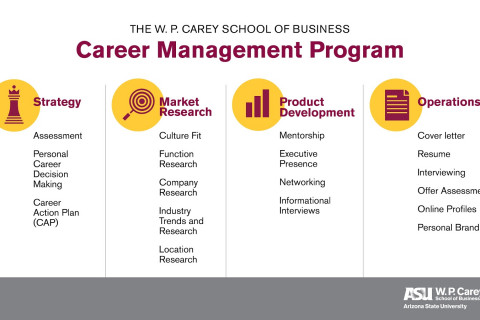

At W. P. Carey, networking means using a variety of channels to promote yourself and build relationships as a professional. It is not just about meeting people—it is about strategically presenting your best self in situations where your story, skills, and goals matter. This includes how you present your personal narrative, build your professional brand, conduct informational interviews, and show up across different platforms.
Networking as a whole is the cultivation and maintenance of professional relationships within a professional setting. It is a fundamental tool that has the potential to significantly support your success in navigating the job market. The people you develop relationships with form a network with valuable knowledge and connections that can help you—and others—grow. But for your network to thrive, it is essential to nurture and maintain those relationships over time.
W. P. Carey Alumni explain explain why building relationships through networking is core for your career strategy in this short video.
Use the Networking Model and the Guide to networking outreach via LinkedIn to master your skills. Start by understanding how to capitalize on LinkedIn features to build your network and finding W. P. Carey alumni in LinkedIn to network.
A great place to start is preparing your Personal Narrative– the key to opening the doors of communication! From there, you can progress to informational interviewing and creating an effective personal brand online.
- Personal narrative
- Informational interviewing
- Personal branding in the digital sphere
- Personal narrative
In a career context, your personal narrative is the story you tell about your journey, experiences, achievements, and goals. It is how you introduce yourself in interviews, networking events, informal conversations, cover letters, or even at social mixers.
A strong narrative helps others understand who you are, what you bring to the table, and where you are headed. It builds a connection and makes you memorable.
When crafting your personal narrative, ask yourself these four key questions:
- Who is my audience? – Tailor your message to the person or group you are speaking with.
- What do I bring? – Highlight relevant strengths, skills, and experiences from your background.
- Who am I? – Focus on your professional identity and what makes you a strong fit for a role, company, or industry.
- Where am I going? – Share your career goals and how you are working to achieve them.
By reflecting on these questions and practicing how you communicate them, you will be better prepared to make a lasting impression—whether in person or online.
Leverage the Personal Narrative Worksheet for undergraduates, Specialized Master’s, or MBA students to create yours! If you are an international student, take a look at the International Student’s Personal Narrative Worksheet.
- Informational interviewing: A powerful tool for career exploration
Conducting an informational interview is an excellent way to explore careers, gather real-world insights, and make informed decisions about your professional path. It is also a great opportunity to start building relationships with new contacts!
What is it?
It is very important to understand that this is not a job interview. Instead, it is a low-pressure, informal conversation with someone in a job, field, or industry you are curious about. The goal is to learn from an individual’s experience, gain insider tips, uncover possible career paths, and build meaningful professional connections. Take a look at the Informational interviewing handout for additional information.How do you initiate an informational interview?
Begin by identifying the industries or roles you are interested in. Then, seek out professionals from your existing network or identify new ones through LinkedIn, faculty referrals, or career services. Send a brief, friendly, respectful message explaining who you are and why you would like to speak with them. Many professionals are open to sharing their experiences and are flattered by your interest. Others use platforms like LinkedIn for different reasons, or may have notification settings turned off, so if you do not receive responses from every contact you reach out to, do not take it personally. The more contacts you reach out to, the better your chances will be of receiving positive responses!How to prepare
Be sure to prepare well for each conversation. Research the industry or role you are interested in thoroughly in advance so that you can ask informed, thoughtful questions beyond what is easily found online. The TIARA framework (from The 2-Hour Job Search by Steve Dalton) is a great starting point for questions focusing on Topics, Insights, Advice, Resources, and Assignments. You can learn more by watching this INSEAD Career Insights video interview with Steve Dalton or this Firsthand video previewing the 2-Hour Job Search book.Tips for conducting and following up on informational interviews
Treat the conversation professionally, but keep the tone friendly and curious. As you wrap up, thank the person for their time and insights. If it feels appropriate, ask whether you can stay in touch or connect on LinkedIn. This can open the door for a continued relationship—possibly even mentorship.Afterward, take time to reflect on what you learned. Keep notes on key takeaways and any follow-up actions discussed. Follow through promptly if you were given advice, a contact, or a next step. Always send a thank-you note expressing your appreciation and highlighting what you found especially helpful.
Over time, nurture these connections by checking in periodically and sharing updates about your academic and career progress, as well as any action items they recommended. Taking these steps helps turn a one-time meeting into a lasting professional relationship.
- Personal branding in the digital sphere
Your personal brand is how you present yourself to others—especially in professional settings. It is a simple, clear way of showing who you are, what you are good at, and what you are working toward. When your brand is strong, people remember you for the right reasons.
Once you identify your career goals, your personal brand should help you reach them. That means thinking about how you act, communicate, and appear—online and in person. A clear and consistent brand helps others see your strengths and understand how you can add value.
Once you have worked on your personal narrative, you’ll be well positioned to transfer your focus to your online presence. This includes your profiles on platforms like LinkedIn, ASU CareerLink, and anywhere else you show up professionally. If you have profiles on social media, make sure they align with your personal brand as well, or set your privacy settings so that these are private.
Make sure your image is consistent across all platforms. If someone looks you up on LinkedIn and then ASU CareerLink, they should see the same message about who you are. This builds trust—and trust makes people more likely to connect, recommend, or hire you.
Use the following guides for creating a powerful LinkedIn Profile and ASU CareerLink profile. Read what our W. P. Carey Alumni share in W. P. Carey Alumni Share 7 Personal Branding Tips for LinkedIn , and explore more about Building Your Personal Brand in The Digital Sphere .